Sustainability Statement  5

SUSTAINABILITY
STATEMENT

🔊

OUR ENVIRONMENTAL
MANAGEMENT

SAMEE recognises that every step taken related to our business impacts on the environment, be it positive or negative. In order to ensure a minimal negative impact on the environment and the compliance of our activities to the relevant environmental laws and regulations, we formulate our own Environment Policy that promotes environmental responsibility, resource conservation and responsible consumption. A periodic update of our Environment Policy is undertaken to ensure that it meets the latest requirements in terms of sustainability matters.
SAMEE recognises the severity of climate change and its associated adverse impacts on our operations, the natural environment and human society. Therefore, we monitor and optimise our greenhouse gas (“GHG”) emissions and consider climate change in our sustainability and business strategies.

WASTE & HAZARDOUS MATERIAL MANAGEMENT
As SAMEE continues to expand, its production capacity increases accordingly, the Group experience higher production activities. As a result, an inevitable increase in the total amount of scheduled waste disposed and effluent released incurred. We have adopted various proactive measures to reduce the negative impact of waste. At each of our manufacturing facilities, we have established and implemented processes and procedures for the disposal of industrial and hazardous waste, including sludge, used activated carbon, contaminated rags and containers, as well as non-hazardous waste such as food waste and office waste. In FY2023, we added a zirconium line in our new production line in Thailand sites, replacing the existing phosphating process, targeting to start the line by July 2023. Using zirconium, zinc as a hazardous waste will be eliminated.
Our production and waste management processes are effectively monitored and managed by exceptional management systems and experienced personnel.

Table 8:
Management
of scheduled waste

Figure 5:
Scheduled
Waste Disposed

Figure 6:
Effluent
Discharged

ENERGY MANAGEMENT

In light of the trend toward decarbonisation, companies should focus more on the source and management of energy, reducing their own and supply chain GHG emissions and contributing to creating a low-carbon or even net-zero society. SAMEE has continued monitoring and disclosing our energy consumption for years and started reporting GHG emissions this year, aiming to reduce its own emissions by reduction of energy consumption.

Energy
Consumption

Water
Consumption

CLIMATE CHANGE &
ENVIRONMENTAL ISSUES

SAMEE is clearly aware that climate change will have positive or negative impacts on the company’s production and operations. In the future, we will promote the identification of climate-related risks and opportunities, assess the potential and actual impacts of risks and opportunities on SAMEE and eliminate or reduce impacts through project planning and various risk management measures. We will take climate change into consideration in the company’s future strategic development process and seek more sustainable and green strategies to develop our business.
SAMEE set a target to reduce its GHG emission intensity by 10% every year for the next 3 years. We are establishing a GHG emission data tracking and management system and disclosing GHG emissions data from FY2023. In the future, we will further improve the coverage of data scope, promote carbon inventory work and master the comprehensive carbon emissions status of our operations. In addition, we will consider the collection and calculation of scope 3 data where feasible, to assess the carbon emissions of the industry and seek decarbonisation opportunities from the perspective of the supply chain.
Read More

x

Table 8: Management of scheduled waste
Licensed waste
contractors
Only licensed waste contractors are engaged in the collection and disposal of hazardous waste, as authorised by local regulators.

Appropriate waste
storage on-site

All hazardous waste is stored and appropriately labelled on-site to prevent waste contamination and leakage.

Trained and
experienced
personnel

Our facility team is experienced and appropriately skilled. Our Facility officer for Scheduled Waste Management attended the following course: Certified Environmental Professional in Scheduled Waste Management (“CePSWaM”).
04-InspectIcon

On-site
inspections

Regular inspections are performed by facility personnel on waste storage and other facilities to ensure the appropriate handling of scheduled waste.

Waste
Reduction

Wastewater generated from our chemical line was fully treated through our wastewater treatment plant and minimum waste was generated

Lowering consumption
of coolant used

We lower the consumption of coolant through machinery and process optimisation, coolant was recycled on time, thus lowering the volume of spent coolant.

x

This year, we disposed off a total of 444.16 metric tonnes of hazardous waste, with an increase of 158.5 metric tonnes due to a new manufacturing facility added to the scope. The intensity of hazardous waste this year was 0.31 metric tonnes per million revenue.

Total Scheduled Waste Disposed
(Metric Tonnes)

  • 444.16

    FY2023
  • 285.29

    FY2022
  • 284.66

    FY2021

Waste Intensity
(Metric Tonnes per RM Million Net Revenue)

  • 0.31

    FY2023
  • 0.26

    FY2022
  • 0.33

    FY2021

Figure 5: Scheduled Waste Disposed

x

During the production process of SAMEE, a significant amount of effluent will be generated particularly for our aerospace segment. We are committed to ensuring that the quality of effluent discharged complies with local regulations through various management measures and minimise the environmental impact. This year, the amount of effluent discharged from SAMEE has increased from 22,519 kilolitres in FY2022 to 54,927 kilolitres, back to pre-covid levels.

Total Amount Of Effluent
(Kilolitres)

  • 54,927

    FY2023
  • 22,519

    FY2022
  • 21,194

    FY2021

Effluent Intensity
(Kilolitres per RM Million Net Revenue)

  • 38.01

    FY2023
  • 20.21

    FY2022
  • 24.62

    FY2021

Figure 6: Effluent Discharged

x

Energy Consumption

As a production-oriented company, SAMEE has multiple facilities including, factories and offices, significant energy consumption is inevitable. In the production process, we improve energy efficiency through equipment update, process optimisation and mass production. Our newly set up Zirconium line in Thailand which is replacing the existing phosphating process, operates at ambient temperature thus minimising energy consumption. In addition, we encourage employees to control the air-conditioning temperature in the working area and switch off lights and air-conditioning when there are no occupants in a certain area especially during long breaks and after working hours. We are seeing a drop in energy intensity over the last few years.

Electricity Consumption
(MWh)

  • 39,226

    FY2023
  • 33,368

    FY2022
  • 29,554

    FY2021

Energy Intensity
(MWh per RM Million Net Revenue)

  • 27.14

    FY2023
  • 30.00

    FY2022
  • 34.33

    FY2021

Figure 7: Energy Consumption

x

Water Consumption

During the reporting period, we implemented a rainwater harvesting system at one of our sites in Malaysia, installing storage tanks and pipes for gardening and toilet flushing, reducing the use of fresh water. At the same time, a reverse osmosis (“RO”) reject water recycling system was introduced at another site. An estimated average of 44 cubic meters per day of RO recycled water will be used for toilet flushing, scrubber system and wastewater treatment plant. In our sites in Singapore and Thailand, water tap inserts were installed to control water use and reduce the waste of water. We will continue exploring the possibilities and options in our water management plan to implement the above initiatives at all our sites.
Our water consumption includes both production water and domestic water. In FY2023, our water consumption was 178.01 megaliters, an increase of 34% compared to FY2022, mainly due to the addition of new factories and the increase of our production capacity to support the growth of our businesses. We will encourage employees to cultivate awareness of water conservation in daily management and improve the utilisation of water resources.

Total Water Consumption
(Megalitres)

  • 178.01

    FY2023
  • 132.38

    FY2022
  • 124.83

    FY2021

Water Intensity
(Megalitres per RM Million Net Revenue)

  • 0.12

    FY2023
  • 0.12

    FY2022
  • 0.15

    FY2021

Figure 8: Water Consumption

x

Scope 2 GHG Emissions
(Metric Tonnes of CO 2 equivalent)

  • 20,400.01

    FY2023
  • 17,420.64

    FY2022

GHG Emissions Intensity
(Metric Tonnes of CO2 equivalent
per RM Million Net Revenue)

  • 14.12

    FY2023
  • 15.18

    FY2022

Figure 9: GHG EMISSIONS1

The implementation of zirconium line to our new production line in Thailand will reduce the electricity consumption when it is fully operating in July 2023 as electricity is used to generate heat and therefore reducing carbon footprint in the coming future. Having explored the feasibility of renewable energy, we have embarked on a solar panel journey to reduce negative environmental impacts and contribute to reducing scope 2 GHG emissions from electricity consumption. The first solar panel system on our site is expected to be installed and operational by the end of 2023. In addition, we are also concerned about GHG emissions generated outside of SAMEE. We have encouraged our employees to participate in our Carpooling Incentive Programme to reduce the number of vehicles on the road and decrease the emission of harmful pollutants.
In daily management, we have promoted the following measures to improve resource and energy efficiency and reduce emissions.
  • Lower the consumption of coolant use through machinery and process optimisation and thus, reduce the scheduled waste.
  • We encourage all air conditioners at the office to be set between 22 to 24 degrees Celsius, as per recommendation by the Malaysian government, to reduce our GHG emissions
  • Wastewater generated from the chemical line is fully treated through our world-class wastewater treatment plant and limited waste is generated.
  • We have resumed discussion with Malaysian Investment Development Authority (“MIDA”) on the green technology incentive programme. All new buildings will take into consideration of solar panel installation readiness.

SAMEE Carpooling Programme
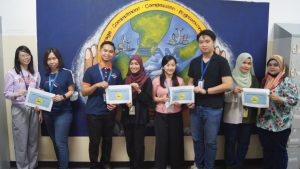
The SAMEE Carpooling Programme encourages employees to reduce our carbon footprint and contributes towards environmental sustainability and GHG emissions reduction.

The programme was successfully launched in January 2023 with an initial three (3) groups of carpoolers who signed up. As continued efforts were being made to promote environmental sustainability, we increased to four (4) groups of carpoolers at the end of Mar 2023. In the reporting period of FY2023, we have achieved an overall reduction in GHG emissions of 0.39 tCO2e based on reduced employee commuting miles. A good first step towards environmental sustainability and emissions reduction involves employee commuting.


1 To calculate the GHG emissions from our purchased electricity, we adopted 1) the GHG emission intensity of Tenaga Nasional Berhad for our operations in Malaysia, 2) the average Operating Margin (“OM”) Electricity Grid Emission Factor from Energy Market Authority (“EMA”) for our operations in Singapore and 3) the GHG emission intensity of Electricity Generating Authority of Thailand for our operations in Thailand.