Sustainability
Statement

ABOUT THIS REPORT

Scope and Boundary

This Statement covers the sustainability performance of SAMEE and its Group of companies during the financial year ended 31 March 2024. The scope will cover the business operations of SAMEE in Malaysia, Singapore and Thailand.
We adhere to the Sustainability Listing Requirements outlined by Bursa Malaysia and follow the guidelines set forth in Bursa Malaysia’s Sustainability Reporting Guide 3rd edition. We also align our disclosures with the following globally recognised standards – the 2021 Global Reporting Initiative (“GRI”) Standards and the United Nations’ Sustainable Development Goals (“UNSDGs”). Recognising the significance of climate risk assessment and disclosure, we are integrating the Task Force on Climate-related Financial Disclosures (“TCFD”) recommendations into our Sustainability Framework. This approach underscores our dedication to enhancing transparency and accountability in managing climate risks, ensuring our compliance and commitment to best practices.

MESSAGE FROM OUR
CHIEF SUSTAINABILITY OFFICER

As we embark on another year of progress and commitment to sustainability, it is my honour to present SAMEE’s seventh annual Sustainability Statement for the financial year ending 31 March 2024 (“FY2024”).

At SAMEE, sustainability is not just a principle; it is ingrained in every aspect of our operations. We believe that sustainable business practices are essential for the well-being of our planet, our communities, and future generations. Throughout FY2024, we continued to prioritise collaboration and engagement with our stakeholders, recognising their invaluable role in driving our sustainability agenda forward. Together, we have worked to ensure that our business activities contribute positively to the economy, environment, and society.
One of our key achievements this year was the successful implementation of several sustainability initiatives across our operations. From the installation of solar panels at SAM Meerkat (M) Sdn Bhd, which has an estimated annual carbon reduction capability of 1,178 tCO2 , to the adoption of water conservation measures and the transition to more environmentally friendly production methods such as the full transition to a zirconium production line in our Thailand operations, each initiative reflects our unwavering commitment to sustainability.
Furthermore, we have enhanced our focus on social engagement, fostering employee well-being while actively giving back to the community through various initiatives. Whether it’s organising sports tournaments, participating in environmental cleanups, or supporting community outreach programs, we remain dedicated to making a positive impact beyond our organisational boundaries.
As we reflect on our journey over the past year, it’s clear that our efforts have not gone unnoticed. We remain committed to upholding the highest standards of sustainability reporting, adhering to the latest guidelines and frameworks set forth by regulatory bodies such as Bursa Malaysia Securities Bhd and the United Nations via the UNSDGs.
Looking ahead, we are excited about the opportunities that lie ahead as we continue to integrate sustainability into every facet of our business. Our commitment to sustainability remains unwavering, and we are confident that through collective effort and shared responsibility, we can build a brighter, more sustainable future for all. Thank you for your continued support and partnership as we strive to create sustainable value for our stakeholders and communities.

Sustainability Strategy and Alignment to UNSDGs

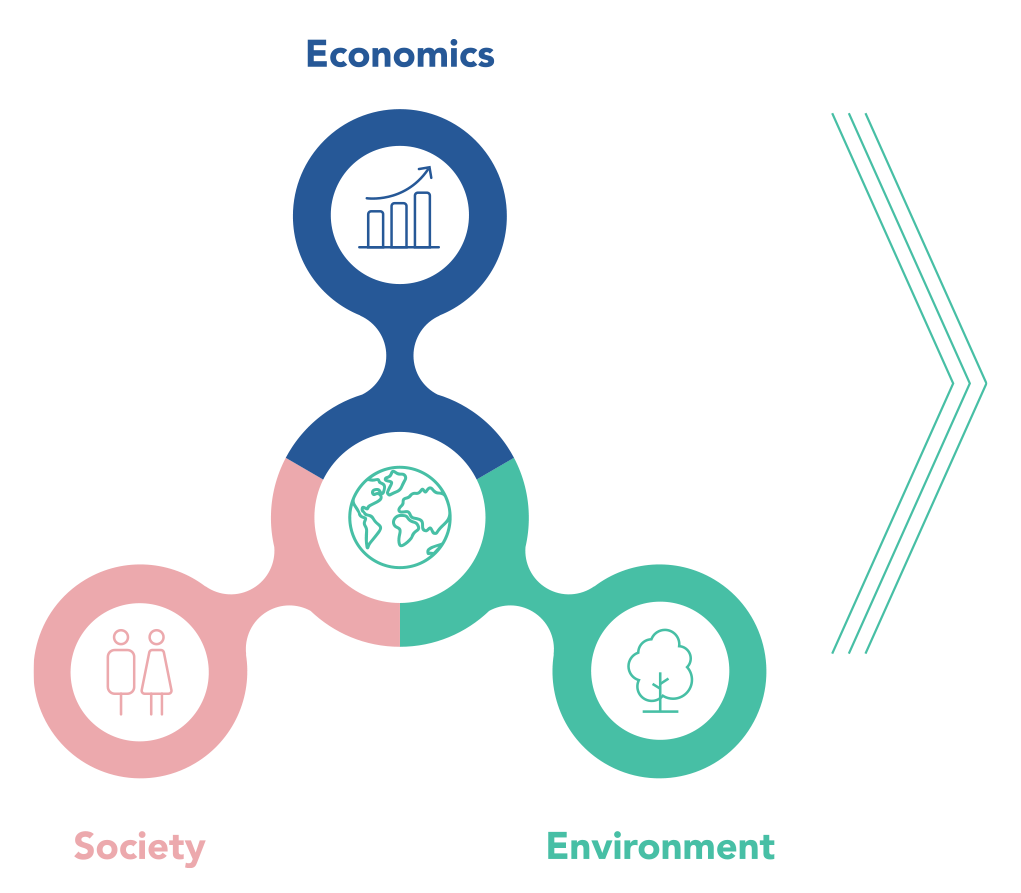
Our sustainability framework is designed to guide our Group’s efforts to operate responsibly, reduce our environmental impact, and contribute positively to society. SAMEE sustainability framework is built on three core pillars: ESG.
The Sustainable Development Goals (“SDGs”) of the United Nations (“UN”) for 2030 are a worldwide call to action for addressing urgent global issues, and at SAMEE, we positively embrace them. These 17 goals serve as a roadmap for fostering collaboration among communities, corporations, and governments to elevate sustainability practices and collectively address pressing global challenges.
During FY2023, we conducted an internal survey with members of the Sustainability Committee Working Group (“SCWG”) to re-evaluate the significance of our chosen UNSDGs. This assessment took into account our material matters, business strategies, principal risks, stakeholder influence, and community impact. As a result, we identified the four SDGs most aligned with SAMEE’s mission and objectives. Moving forward into FY2024, we affirm that these identified SDGs continue to hold the same level of relevance to our organisation. The four (4) SDGs that were identified as the most relevant are as follows:

Table 1: SAMEE’s Top Four (4) SDGs

Sustainable Development Goals Definition Key Stakeholders Impacted Targets
Ensure healthy lives and promote well-being for all at all age
  • Employees
  • Management
  • Directors
  • Community
  • To reduce the number of man-hour-lost per employee from work hazards by 20% by 2025 and 30% by 2030
Promote sustainable economic growth, full and productive employment and decent work for all
  • Customers
  • Investors/Shareholders
  • Employees
  • Community
  • Media
  • To protect labour rights and promote safe and secure working environments for all workers, including migrant workers by having enhanced policy and awareness by complying with Responsible Business Alliance (“RBA”) labour rights requirements in the following areas:
    • Young Workers
    • Wages and Benefits
    • Humane Treatment
    • Non-Discrimination/Non-Harassment and
    • Freedom of Association
Take urgent action to combat climate change and its impacts
  • Customers
  • Community
  • Vendors/Suppliers
  • Reduce 10% of GHG emissions intensity in the next 3 years
  • Introduce solar panels to one of our factories by end of 2023
Ensure sustainable consumption and production patterns
  • Customers
  • Vendors/Suppliers
  • RoHS Compliance
  • Conflict Mineral Compliance

Sustainability Governance Structure
(GRI 2-9)
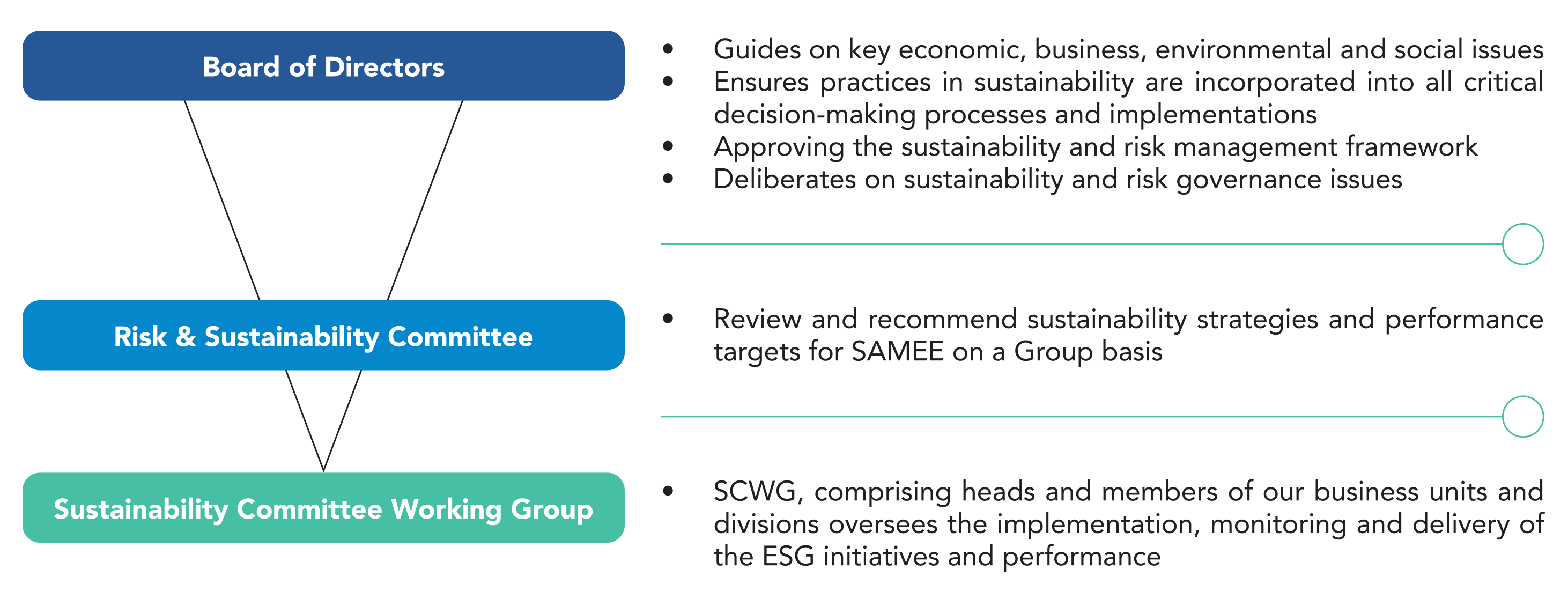
At SAMEE, we place utmost importance on fostering a robust and functional governance structure. Our governance framework is designed to uphold principles of transparency, accountability, and clarity in roles and responsibilities. By ensuring effective decision-making processes, we empower our teams to develop and implement sustainable strategies with confidence. This commitment to a strong governance structure not only guides our actions but also reinforces our dedication to responsible and ethical business practices, ultimately contributing to our organisation’s long-term success and resilience.

Sustainability Framework

Board Governance on EESG

Strategy
  • EESG Risks and opportunities integrated into SAMEE’s long-term strategy
  • EESG performance of monitoring, i.e., milestones and goals
Messaging
  • Ensure alignment of EESG messaging and activities with the company’s purpose and shareholders’ interests

Risk Assessment

  • Oversight on sustainability materiality
  • Allocation of oversight of the risks to full board/individual committees

Reporting

  • Communication platform for the company’s EESG disclosure
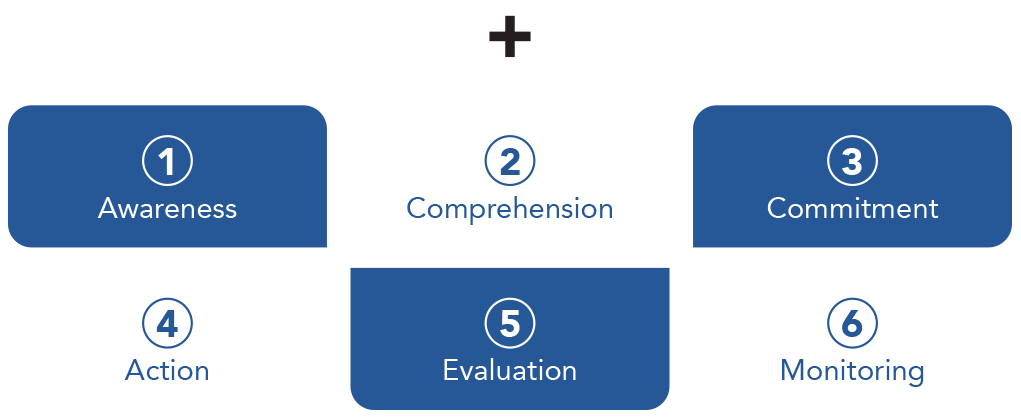
Figure 3: Sustainability Framework and Board Governance on EESG

Stakeholder Engagement
(GRI 3-1)

Engaging a diverse stakeholder, encompassing businesses, organisations, government authorities and individuals that are involved in our daily operations and long-term planning is a practice that SAMEE is dedicated to doing continually and effectively. We firmly believe that transparent communication is the cornerstone of building trust with stakeholders. This approach allows us to share our vision and unwavering commitment to sustainability, which we consider essential for the success and resilience of our business as we pursue our growth objectives.
In our journey towards achieving our long-term business objectives, we have assessed, prioritised, and actively engaged with our stakeholders. This comprehensive approach ensures that we have acknowledged and taken into consideration all relevant parties in shaping our sustainability initiatives and business strategy. By valuing the input and perspectives of our stakeholders, we are able to develop a robust plan that aligns with our vision for a sustainable future and drives the realisation of our business goals.

Our current stakeholder engagement approach is as follows:

Table 2: SAMEE’s Stakeholder Engagement

Stakeholders Areas of Interest / Concerns Engagement Channels Sub-Group Frequency
Internal Stakeholders
Employees / Management / Directors
  • Update on the current and future directions of SAMEE
  • Update on the current and projected performance of SAMEE
  • Opportunities for healthy career growth, upskilling, and learning and development
  • Update on the current and future plans for the working environment, especially on job security, health and safety
  • Safeguarding human rights and a humane and respectful workplace environment
  • Periodic and ad-hoc meetings and interactions
  • Workshop discussions
  • Weekly coordinating meeting and Weekly operation meeting
  • Quarterly employee communication session
  • Quarterly management meeting
  • Annual Management Retreat/ Conference
  • Board and Board Committee meetings
  • Plant/Factory visits
  • Learning and development programmes
  • Value Creation Programme
  • Corporate volunteering programmes
  • Induction training
  • Employee performance appraisal
  • Employee Engagement Surveys
  • SAMEE eHub App on Smartphones
  • HR participates in Career Talks during SAMEE Career Day and career fairs organised by Perkeso and Learning Institutions
  • Directors
  • Management
  • Permanent staff
  • Contract staff
  • Annually
  • Quarterly
  • Monthly
  • Weekly
  • Ongoing
Shareholders / Investors
  • Current and projected growth opportunities and threats
  • Funding needs
  • Risk management
  • Corporate governance
  • ESG-compliant and initiatives
  • Board representation and diversity
  • Timeliness and periodic Bursa announcements
  • Analysts/fund managers presentations and briefing
  • Analyst reports on SAMEE
  • Media write-ups on SAMEE
  • Annual General Meeting
  • SAMEE Annual Report
  • Shareholders
  • Investors
  • Financial Institutions
  • Annually
  • Quarterly
  • Ongoing

Materiality Assessment
(GRI 3-1)

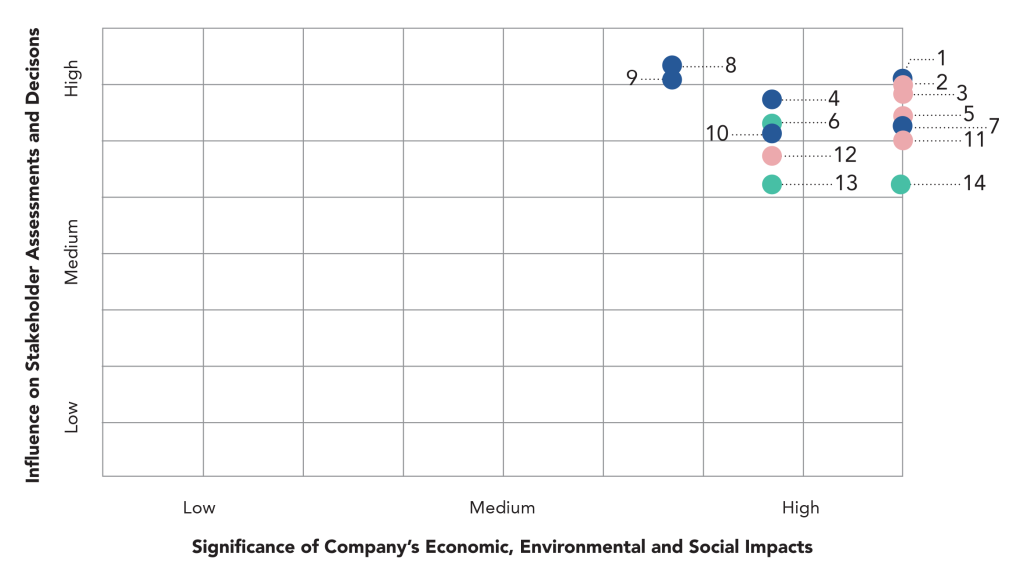
SAMEE performed a materiality assessment during the financial year ended 31 March 2022. The materiality assessment ensures that material matters are relevant and will remain relevant until the next materiality assessment. During this period, material topics were sent to directors and other key stakeholders for review. This approach to managing the sustainability risks and opportunities posed to our business and helps us in ensuring that we prioritise the issues that have the greatest impact on the economy, society and the environment.
In FY2024, SAMEE revisited its previously identified material topics to ensure they remain relevant and reflective of stakeholder concerns through our Sustainability Committee. By periodically refreshing our views on material topics, we enhance our responsiveness to emerging sustainability risks and opportunities. This iterative approach reinforces our commitment to transparency and stakeholder engagement in our sustainability reporting practices.

Step 1: Identify

Identified material topics reflecting their utmost relevance to our business.
Surveys were administered to directors, key stakeholders, selected suppliers, and designated employees.

Step 2: Prioritisation

Reviewed and discussed internally through an internal sustainability workshop and focused discussion to determine the material topics aligning SAMEE’s most relevant and impactful issues.

Step 3: Validation

Validation of prioritised material topics with Risk and Sustainability Committee (“RSC”).
Prioritised material topics presented to the Board of Directors and sought approval.
This FY2024, the management has reaffirmed the relevance of the existing 14 material topics, maintaining consistency with the previous reporting period. This strategic decision underscores our steadfast commitment to addressing the most pertinent and impactful issues facing our operations. This reaffirmation ensures that our reporting efforts remain aligned with key areas of concern, demonstrating our dedication to transparency and accountability in addressing critical sustainability challenges.
  1. Customer Satisfaction & Relationship
  1. Product & Service Quality
  1. Economic Performance
  1. Supply Chain Management
  1. Cybersecurity & IT Resource Management (ERP System)
  1. Technology, Innovation & Development
  1. Waste & Hazardous Materials Management
  1. Climate Change & Environmental Issues
  1. Energy Management
  1. Employee Well-Being Health & Safety
  1. Ethics & Compliance
  1. Labour Practices & Rights
  1. Attracting, Developing, Rewarding & Retaining Employees
  1. Employee Learning & Development

Figure 4: Our top 14 material topics 

Targets of Our ESG Material Topics
(GRI 3-2, 3-3)

Table 3: ESG Material Topics, Targets and FY2024 Performance
ESG Material Topics Our Target FY2024 Performance
Employee Well-Being Health & Safety To reduce the number of man-hour-lost per employee from work hazards by 20% by 2025 and 30% by 2030 Lost Time Incident Rate (“LTIR”) of 0.35

SAMEE surpassed the target with a 79% reduction in man-hour-lost compared to a FY2023 baseline
Labour Practices & Rights To protect labour rights and promote safe and secure working environments for all workers, including migrant workers by having enhanced policy and awareness by complying with RBA labour rights requirements in the following areas:
  • Young Workers
  • Wages and Benefits
  • Prohibition of Forced Labour
  • Humane Treatment
  • Non-Discrimination/Non-Harassment and Freedom of Association
SAMEE received zero complaints on human rights during FY2024

SAMEE further enhanced our due diligence on our local & overseas agents to ensure no forced labour throughout our recruitment process of migrant workers

SAMEE has provided awareness training on RBA requirements to all its employees and new intakes
Climate Change & Environmental Issues To reduce 10% of GHG emissions intensity per year in the next 3 years SAMEE did not achieve this target. This is due to our Thailand facilities are yet to achieve economical scale in revenue

The target to install solar panels for FY2024 has been achieved towards the end of FY2024, providing only a one (1) month impact
Waste & Hazardous Materials Management
  • RoHS Compliance
  • Conflict Mineral Compliance
SAMEE has ensured compliance with RoHS and Conflict Mineral regulations

Table 4: ESG Material Topics and FY2024 Achievements

ESG Material Topics FY2024 Achievements
Customer Satisfaction & Relationship
  • Maintained high level of customer satisfaction as reflected by our review of internal metrics.
  • Achieved consistently high on-time deliver (“OTD”), earning us Preferred Supplier Status and Top 3 contract manufacturer ranking amongst our customers.
  • Awards:
    • Delivery Performance Award (Aviatron, Malaysia)
    • Outstanding Quality Performance Award (SAM Precision, Malaysia)
Ethics & Compliance Anti-corruption:
  • 100% of our total workforce has received comprehensive anti-corruption training.
  • 100% of operations assessed for risks related to corruption.
  • No confirmed incidents of corruption in FY2024
Whistleblowing:
  • No complaints were received during the reporting period
Economic Performance During FY2024, SAMEE contributed a total of RM86,500 in community investments.
Attracting, Developing, Rewarding & Retaining Employees 100% completion of RBA training for all employees including new joiner
Energy Management
  • Total energy consumption of 51,793 MWh, a 32% increase from FY2023
  • Total energy intensity of 34.90 MWh/RM
Product & Service Quality Through our Quality Incentive Scheme program, we have achieved an increase of 22% in incentive payouts in FY2024 Q4 vs Q1, and a 15% increase in FY2024 from FY2023.
Technology, Innovation & Development
  • Robotic Automation Project & Work Instruction Systems for enhanced productivity and quality standards
  • Carousel Systems for improved operational accuracy
  • Material Planning & Simulation Software streamlined inventory management and delivery precision
  • Sustainable Energy Initiatives such as solar panels and electric vehicle (“EV”), charging stations for environmental stewardship
Employee Learning & Development SAMEE achieved an average of 60 training hours per employee in FY2024
Supply Chain Management SAMEE has achieved a total of 47% of their procurement spending towards local suppliers.
Cybersecurity & IT Resource Management (ERP System) In FY2024, there was zero personal data protection incidents and losses of customer data.
Scroll to Top